

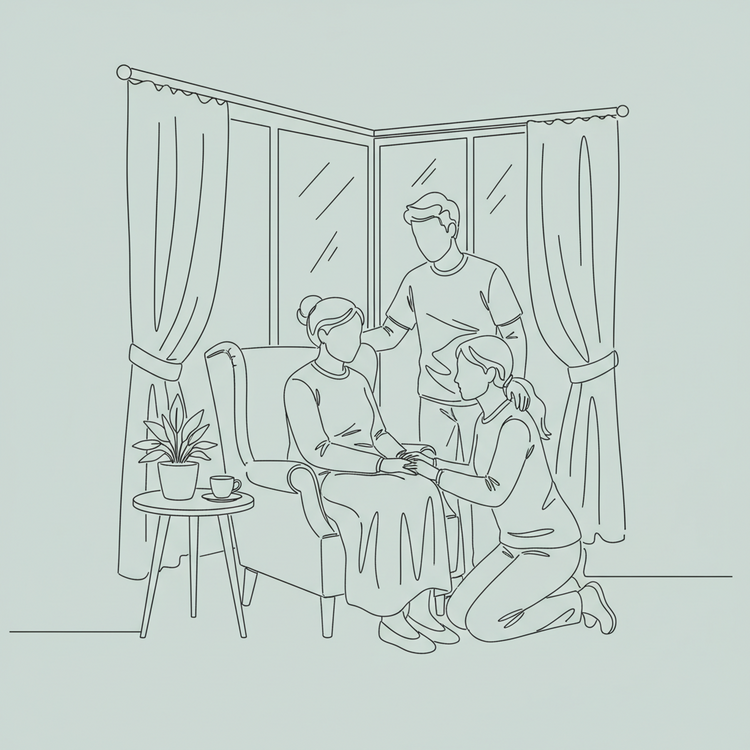
The journey with hospice care is centered on providing comfort, dignity, and peace during life’s final chapter. But at ViaQuest, our commitment to you and your family does not end when your loved one passes. We understand that grief is a profound and personal journey, and our care continues, offering a steady hand to hold for 13 months after your loss.
This period of support, known as bereavement care, is a fundamental part of the hospice promise. It is a compassionate extension of our services, designed to help families navigate the complex emotions that follow the death of someone they love. This article explains how ViaQuest’s comprehensive bereavement program provides ongoing support, tailored resources, and a safe space for healing.
Extending Care Beyond a Patient’s Passing
Bereavement support isn’t an optional service; it is a core component of hospice care. Under the Medicare Conditions of Participation, all hospice providers are required to offer bereavement counseling to the family and caregivers for up to 13 months. This mandate reflects a deep understanding that the family’s well-being is intrinsically linked to the patient’s journey.
At ViaQuest, we see this not as a regulation to follow but as a moral commitment. Our bereavement program is designed to proactively address the emotional, spiritual, and practical challenges of grief. By staying connected with your family, we can offer support that evolves with your needs, helping you process your loss in a healthy and supported way.
Individual Counseling, Group Support, and Personalized Resources
Grief is not one-size-fits-all, and neither is our support. We recognize that every person and every family experiences loss differently. To honor these unique journeys, we offer a diverse range of resources. As highlighted in a report by Hospice News, the trend in modern hospice care is to expand offerings beyond traditional methods to better meet community needs.
Our program includes:
- Individual Counseling: Confidential one-on-one sessions with trained grief counselors provide a private space to explore feelings, develop coping strategies, and work through personal challenges.
- Support Groups: Connecting with others who have experienced a similar loss can be incredibly validating. Our groups offer a sense of community and shared understanding, reducing feelings of isolation.
- Educational Mailings and Resources: We provide regular mailings with information about the grieving process, self-care tips, and articles that can help you understand what you are experiencing.
- Memorial Events: We host events to honor and remember the lives of our patients, giving families a chance to celebrate their loved ones in a supportive community setting.
Support Through Holidays and Milestones
The first year after a loss is often marked by a series of painful “firsts”—the first birthday, anniversary, and holiday season without your loved one. These milestones can trigger waves of intense grief. Our bereavement team is acutely aware of these sensitive times and provides specialized outreach to help you prepare for and navigate them.
This proactive support might include a phone call before a significant date, a card of remembrance, or a workshop focused on coping with holiday grief. By acknowledging these difficult moments, we help you find ways to honor your loved one while also caring for your own emotional health.
Specialized Grief Care for Children and Teens
Children and adolescents grieve differently than adults, and their needs require a specialized approach. As organizations like the National Alliance for Grieving Children emphasize, unprocessed childhood grief can lead to long-term emotional challenges. Our program provides age-appropriate resources designed to help younger family members express their feelings in a safe and constructive way.
Following guidance from experts like the National Hospice and Palliative Care Organization (NHPCO), our support for children may include access to art therapy, play-based activities, or connections to peer support groups. We work with parents and guardians to provide tools that help the entire family heal together.
How Your Family Accesses Ongoing Support
When your family chooses ViaQuest Hospice, you are automatically enrolled in our bereavement program. There are no forms to fill out or calls you need to make to begin receiving support. Our bereavement coordinator will reach out to you after your loved one’s passing to introduce themselves and explain the available services.
This seamless continuation of care is especially important in identifying and supporting those who may be at risk for more intense grief reactions. The formal recognition of Prolonged Grief Disorder by the American Psychiatric Association underscores the clinical importance of timely, professional support. Our proactive outreach helps ensure that no one has to navigate their grief journey alone.
Navigating the landscape of grief can feel overwhelming, but you don’t have to do it alone. If you have questions about the grieving process or the support available after a loved one’s passing on hospice, our compassionate team is here to listen. Call ViaQuest Hospice at 855.289.1722 for guidance.
You can also download our Complete Guide to Hospice Care for comprehensive information about the full spectrum of services we provide.
Key Takeaways
- Bereavement care is a mandated, core component of hospice, with ViaQuest providing support for 13 months after a patient’s passing.
- Support is personalized and includes individual counseling, support groups, and proactive outreach during difficult milestones like holidays and anniversaries.
- Specialized, age-appropriate resources are available for children and teens to help them process grief in a healthy way.