

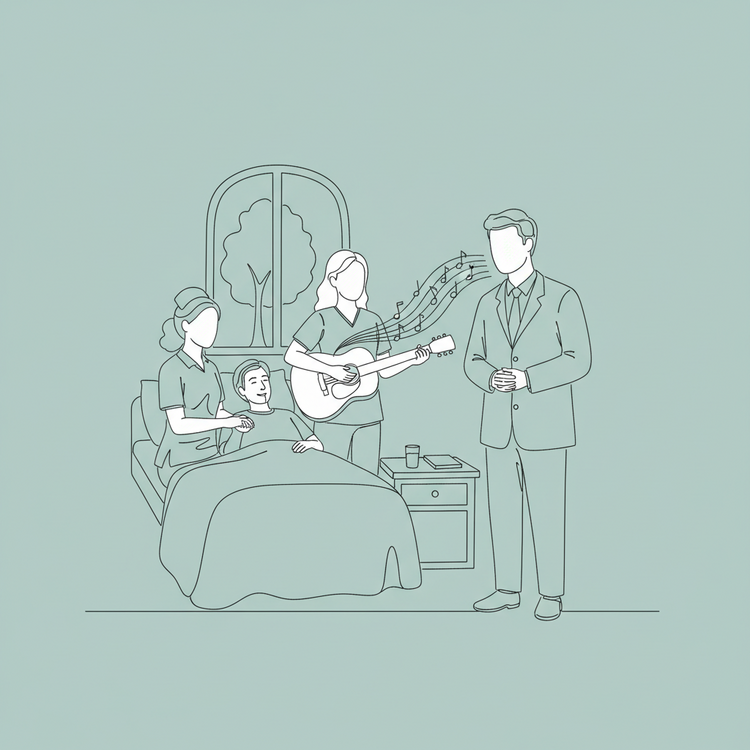
There are moments at the end of life when words fall short. In these quiet, profound spaces, music often finds a way to communicate what we cannot, offering a language of emotion, memory, and peace. A familiar melody can reach across the silence, unlocking a cherished memory, soothing a restless spirit, or simply providing a gentle, comforting presence. In hospice care, music is more than entertainment; it is a powerful therapeutic tool that honors a person’s life story and nurtures the human spirit.
This practice, known as music therapy, uses the clinical and evidence-based application of music to accomplish individualized goals. It can help manage physical symptoms, provide emotional support for patients and their families, and create moments of deep, meaningful connection. This article explores how music therapy enriches the end-of-life journey, from its profound impact on individuals with dementia to its ability to bond families in shared harmony.
Music Therapy: More Than Just a Song
While listening to a favorite album can be uplifting, music therapy in a hospice setting is a structured, clinical practice. It is often provided by a board-certified music therapist (MT-BC) who designs interventions tailored to a patient’s specific needs. As highlighted in recent industry reports, hospices are increasingly integrating these creative therapies to provide holistic, person-centered care that addresses emotional and spiritual needs alongside physical ones.
According to the American Music Therapy Association, these interventions can range from creating personalized playlists and singing beloved songs to using instruments for gentle sound therapy. The goal is not performance, but connection—using music to reduce anxiety, manage pain, and improve a patient’s overall quality of life.
Reaching Through the Fog: Music and Dementia
For patients with Alzheimer’s disease or other forms of dementia, verbal communication can become difficult or impossible. Yet, the part of the brain that processes music often remains remarkably intact. The National Institute on Aging explains that music can stimulate these preserved neural pathways, evoking memories and emotions that were seemingly lost. A hymn from childhood or a favorite song from a wedding can trigger a smile, a tap of the foot, or even a moment of lucid connection with a loved one.
In these moments, a person who can no longer speak might hum along or make eye contact, re-establishing a bond that dementia had obscured. This powerful phenomenon provides immense comfort not only to the patient but also to family members who witness a flicker of the person they remember.
The Art of the Personalized Playlist
The effectiveness of music in hospice care hinges on personalization. A song that is deeply meaningful to one person may be meaningless to another. That is why creating a personalized playlist is a cornerstone of effective music therapy. Therapists and caregivers work with families to learn about a patient’s life story: the music they danced to as a teenager, the songs they loved in their 20s, the spiritual hymns that brought them comfort, or the cultural music that connected them to their heritage.
This musical life review helps create a soundtrack that is uniquely theirs. Listening to these songs can transport a patient to a happy time, affirm their identity, and provide a profound sense of peace and continuity. It is a simple yet deeply respectful way to honor a life well-lived.
Managing Symptoms and Finding Peace
Beyond its emotional and spiritual benefits, music is a proven, non-pharmacological tool for symptom management. A recent systematic review published in the Journal of Pain and Symptom Management confirmed that music therapy can effectively reduce perceived pain, anxiety, and agitation. Another meta-analysis in BMC Palliative Care found it significantly improved quality of life for patients.
The gentle rhythm of a live guitar at the bedside can slow a rapid heart rate, quiet restless movements, and ease labored breathing. For a patient experiencing anxiety, calming instrumental music or familiar, soothing songs can provide a much-needed sense of security and tranquility, creating a more peaceful environment during the final stages of life.
A Bridge for Connection: Music for the Whole Family
The therapeutic benefits of music extend to everyone in the room. Sharing music can transform the atmosphere, easing the tension and sadness that often accompany a vigil. It provides a way for families to connect with their loved one when conversation is no longer possible. Singing a favorite song together can be a powerful act of love, creating a lasting memory of unity and shared comfort.
Research shows that music therapy can reduce stress for caregivers and improve a family’s perception of the end-of-life experience. It fosters a space for expressing emotions, sharing stories prompted by a song, and simply being present together in a moment of harmony.
To discover how a personalized music program can bring comfort and connection to your loved one on their end-of-life journey, please contact the ViaQuest Hospice team. Our compassionate professionals can explain our approach to holistic care, including our dedicated music therapy services. Call us at 855.289.1722 to learn more.
You can also download our Complete Guide to Hospice Care for comprehensive information about the services and support available to patients and their families.
Key Takeaways
- Music therapy is an evidence-based practice that uses music to manage symptoms like pain and anxiety, providing comfort in a non-pharmacological way.
- For individuals with dementia, music can stimulate memory and enable moments of connection and recognition when verbal communication has faded.
- Personalization is essential; playlists based on a patient’s life history, culture, and preferences are most effective at providing comfort and honoring their identity.